



Is it actually toxic fumes from lead, or from some other substance?
When soldering electronic circuit boards or electrical wires, the smoke that is produced results from the melting of the solder—a lead-based alloy—onto the surfaces of the materials being joined.
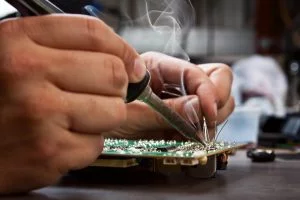
The image shows the components of soldering smoke.
The smoke generated during soldering consists of 95% particulate matter and 5% various gases. This 95% particulate component originates from resin flux that has been heated above 185°C, causing it to decompose into smoke particles known as “colophony,” as illustrated in the image above.
Typically, a solder wire consists of 60% tin and 40% lead. For these metals to melt and subsequently vaporize (transition into a gaseous state), temperatures of 2603°C and 1750°C, respectively, would be required. Since the temperatures reached during the soldering process are well below these levels, no tin or lead molecules are released into the smoke. Instead, the smoke is generated by the melting of the materials on the surfaces being soldered.
However, the smoke produced is always toxic. Its composition depends on the materials being melted during the welding or soldering process; yet, regardless of what substances are melted, the resulting smoke is, in fact, toxic!
The fumes generated during soldering are hazardous to the human body. Inhaling them over an extended period leads to the accumulation of toxins, which enter the bloodstream and subsequently affect the nervous and respiratory systems—ultimately causing serious harm to one’s health.
Using a solder fume extractor is essential when performing soldering work; such equipment is available for purchase from Envotech Engineering Co., Ltd., a company within the TN Group.
Basic safety precautions to follow while soldering include:
- Soldering should be done in a well-ventilated area.
- Wear protective eyewear to prevent chemicals from splashing into your eyes.
- Wash your hands after soldering.
These things will help reduce risks that could affect your health.